
BTS Chair: John Corcoran
Hi everyone. Well, this is my fourth and probably my final Chair’s Corner – an update on what the BTS Committee has been involved in the last few months, and what I think are subjects you will find interesting. Alastair Smith will be taking over as Chair at the May AGM. My two-year term has flown by. It has been such a privilege, opening so many opportunities for me. I can honestly say that throughout my career, the BTS has been good to me. From my first introductions entering the Harding Prize competition in 1991, to the many great nights I enjoyed after the evening presentations. As I draw closer to retirement (not yet though!) I will look back with great pride on my time as BTS Chair. I will remain on the Committee, where I will have the pleasure of organising our Annual Dinners.
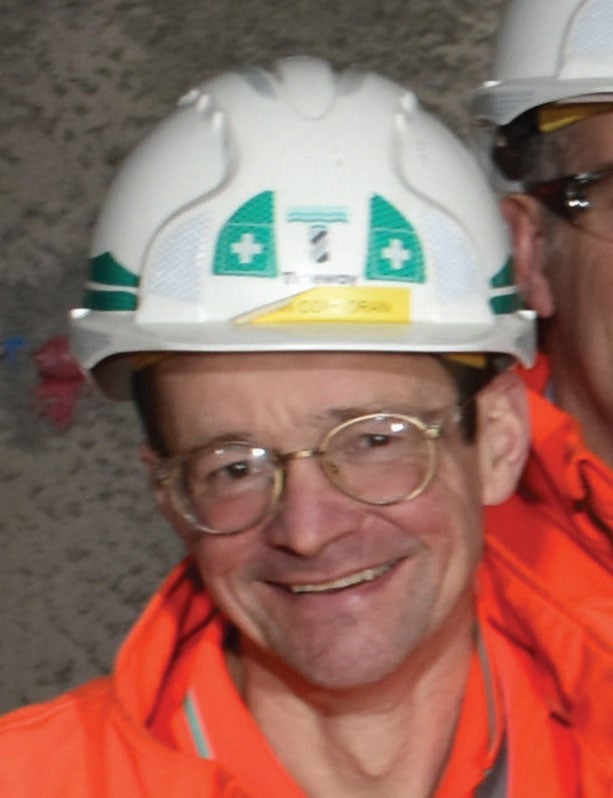
So it is with sadness that I tell of John Scholey’s passing. It was Ivor Thomas who, in 2019, asked me to help John organise the Annual Dinners. Again, a complete privilege which the BTS provided. I came to know John and his wife Liz well, frequently visiting them in Tunbridge Wells. Liz asked me to say a few words at the celebration of John’s life. There were many speakers there, Morris Dancers, musicians, storytellers, children, grandchildren and Liz. All took part and offered reflections on John’s life. It was all you would expect from such a flamboyant, fun-loving person. My job was to talk about his career as a civil engineer. I received several stories from those who had worked with John during his career, which greatly helped me put a few words together.
Colleagues recall when John was working in the jungle in central Java, he amazingly managed to conjure up a steam train with six carriages. Families boarded with picnic baskets and blankets, embarking on a day so magical that colleagues still speak of it with disbelief and delight. It was the kind of experience only John could have imagined—and make happen. For me, my lasting memories will be of his endless enthusiasm, his ever present humour, his voice, always laced with a hint of mischief, coupled with his professionalism and sense of fun. And his waistcoats! A cocktail of qualities that made him unique, irreplaceable and someone who looked for and found the fun in everything he did.
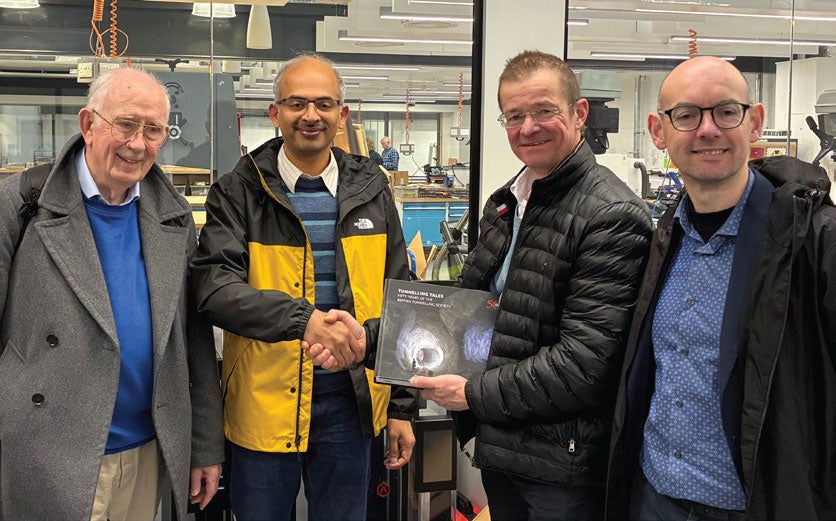
In January I visited Exeter University with retired BTS member Mike McConnell. We presented ‘BTS at 50’ books to their civil engineering professors, Dr Prakash and Dr Vinai, then toured the laboratories and gave a lecture to third year students. During the six years Ken Spiby lead the team writing the book, one of his aims was for the book to act as a conduit into schools and universities, to inspire the young.
The BTS is always looking to foster links with universities. For many years Benoit Jones ran the MSc in Tunnelling, at Warwick University. The course provided a unique mix of academic learning coupled with meeting industry speakers. The BTS is working hard to resurrect the MSc course, with the anticipated support of clients, contractors and consultants.
Booking is now open for this year’s BTS Annual Conference, over 6-7 October, at the Queen Elizabeth Conference Centre, Westminster, London. There is always an excellent array of industry speakers.
It was one of my first duties, as new BTS Chair, to deliver the David Wallace lecture at the Conference. I choose to speak about a topic that has always fascinated me – that often very fine line between a contract or a specific task being a success or a struggle. I gave examples from my career of both successes and failures. I tried to capture what is the magic formula for success. Reflecting on my lecture, I would say that ‘ownership’ is a fundamental requirement for then you have responsibility, you care, and your driving goal is to succeed. This then colours all your actions, what you say, your interactions with others, and what you think.
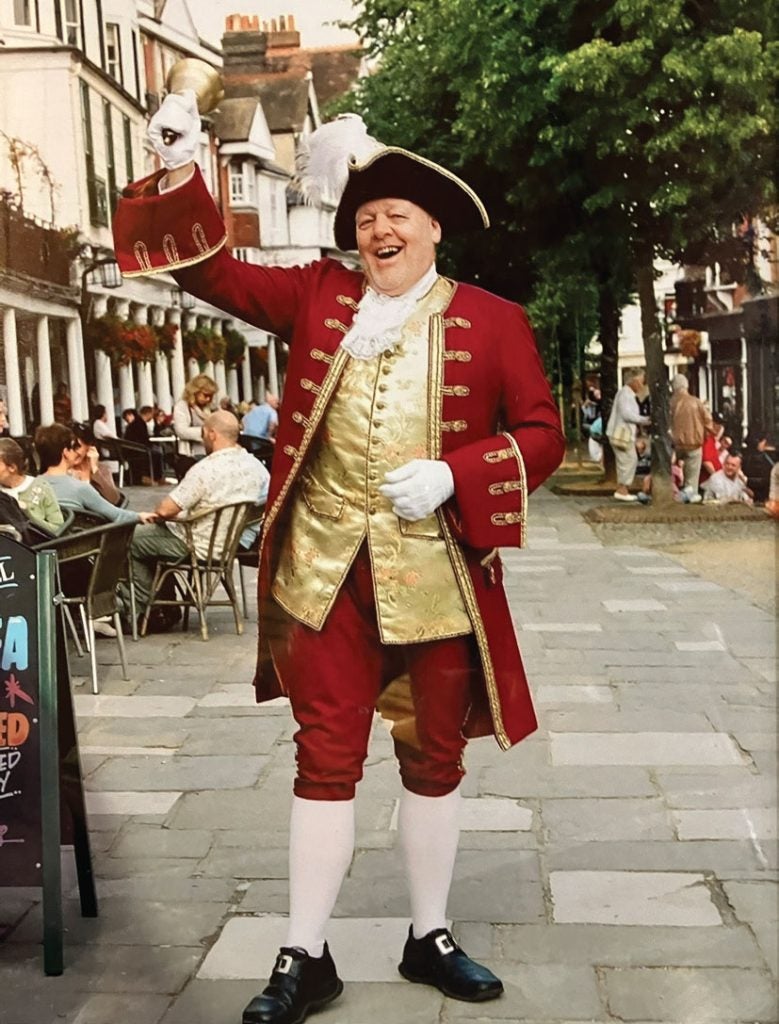
This year’s bi-annual Harding Lecture, in November, will be along the lines of a similar theme: how to construct major infrastructure successfully, and give confidence to government decision-makers, that tunnels, and equally important, the subsequent fit-outs, can be constructed efficiently, with known programme and financial outcomes.
I am delighted to say that this year the BTS has received eleven entries to this year’s Harding Prize Competition, and the three shortlisted will present at the BTS’s 19th March evening meeting. For me, anyone who enters a paper is a winner. Gathering your thoughts, committing to paper, crystalising your learning, are invaluable tools.
It was wonderful to see almost 200 people at the BTS’s January’s evening meeting. I am very thankful to our speakers, Xavier Torello Ciriano, Michael Greiner and Dominik Hoerrle, who spoke about the six-year journey they underwent, to design prop-less tunnel opening on the HS2 Northolt Tunnels contract. Many thanks also to Costain, Strabag and Skanska for sponsoring both the bar and the sausage and chips. Which reminds me, when John Scholey put himself up in 1994 to join the Committee one of his pledges was to reinstate sausage and chips after the meetings – a tradition that continues to this day.
November’s talk was on carbon management for the Copenhagen Metro, a project that is ground-breaking in its desire to achieve net zero. I was very impressed with the carbon management tools that they have developed, explaining that it is not just about reducing carbon and steel, you need to assess the whole-life of the infrastructure you are building.
December’s talk saw Colin Eddie and Henry Pairaudeau speak about constructing tunnels using a worldwide patented extruded concrete tunnel lining. No precast segments, just insitu concrete pumped around the tail-skin area of the TBM.
I look forward to February’s talk by Hyuk-Il Jung, from Arup, to focus on a segmentally-lined tunnel in South Korea, which, in 2020, suffered a catastrophic collapse during cross-passage construction in soft ground. This will be a combined meeting with The Institution of Materials, Minerals and Mining (Min South).
November’s annual BTS Health and Safety course was extremely successful, with some very positive feedback from the 60-plus attendees. We have recently introduced an evening social. For the 2026 course we plan to add a session on TBMs and to include more interactive sessions. Many thanks to all the excellent presenters, and to those who assist in organisation, including Rod Young, Roger Bridge, Donald Lamont and Alex Vaughan.
This year’s BTS annual Design & Construction course, from 6th to 10th July, is being held at Warwick University. The course is an entertaining mix of industry-leading figures presenting on their specialised subject, together with evening sports and social activities. The BTS website is now open to take bookings.
This year’s dinner will be on Friday 8th May at the Brewery. I am very much looking forward to our speaker, Sir Tony Robinson. The website i open for bookings.
I would like to thank all members of the Committee for the great work they continue to do, all entirely voluntary.
Well done to the new Chair of the BTSYM, Asil Zaidi, who has taken on this role with great energy and enthusiasm. Also a special mention to the Technical Subcommittee and their Chair, Bethan Haig. The “Sprayed concrete lining design guide” has been published.
I encourage any of you who are not BTS members, to join. I can say, from personal experience, it opens many new doors and is very rewarding. Opportunities also come to join the Committee.
Wishing you all a very happy, safe and successful 2026.
BTSYM Chair: Asil Zaidi
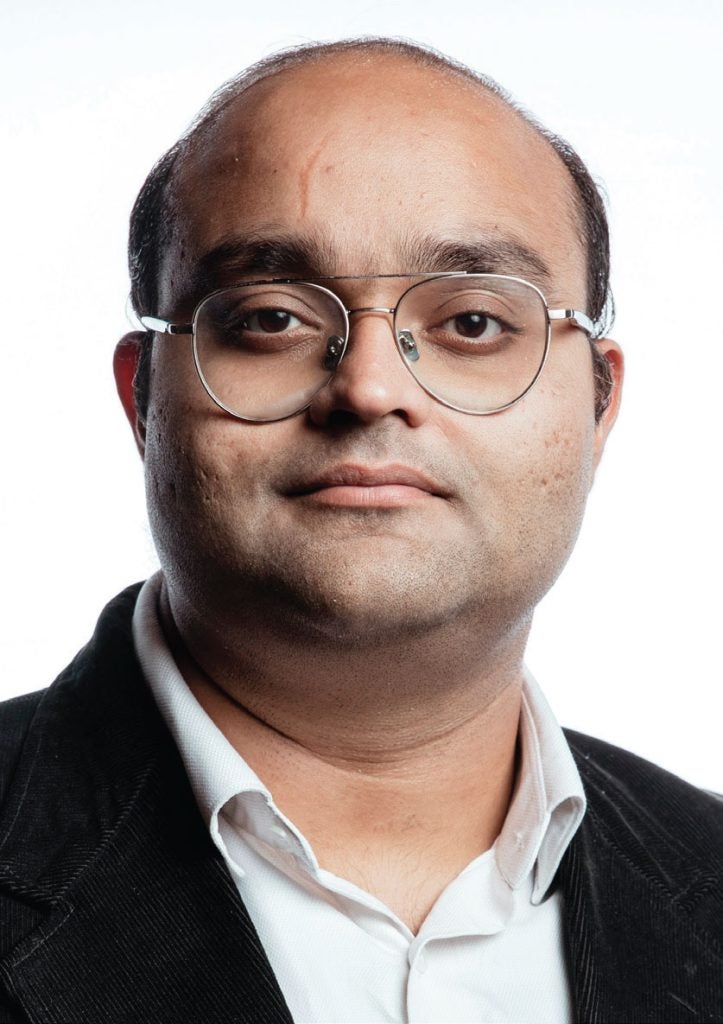
While a tough act to follow, what our last YM Chair, Arabel, achieved in the past year brings challenge – which inspires me. To quote the author Pear S. Buck – “The young do not know enough to be prudent, and therefore they attempt the impossible — and achieve it, generation after generation.” Arabel did a great job getting the YM gang together and binding us into a family by not only maintaining the legacy YM subcommittees of Professional Development, Socials & Media, and Schools & Universities but also establishing those for Diversity & Inclusion, Industry & Partnerships, and Sustainability & Innovation.
Vision
It’s my responsibility to build upon Arabel’s theme – ‘People’ – and take it a notch further with ‘Enabling Innovators’. A decade old echo in my head of an innovation engine from a TED talk by Prof Tina Seelig of Stanford University. A neuro-scientist and author of ‘inGenius: A Crash Course in Creativity’, she inspired this vision and it resonates in congruence with the current YM team values of Trust, Tenacity and Throughput to make an inclusive impact in sync with guidance from the main BTS Committee.
Values:
- ensure a membership network we can Trust – “to break out of our SILOS”;
- establish subcommittees to test our Tenacity – “to try and fail in a safe SPACE”; and,
- Encourage events that rev our brains’ Throughput – “to upskill with new SOLUTIONS”.
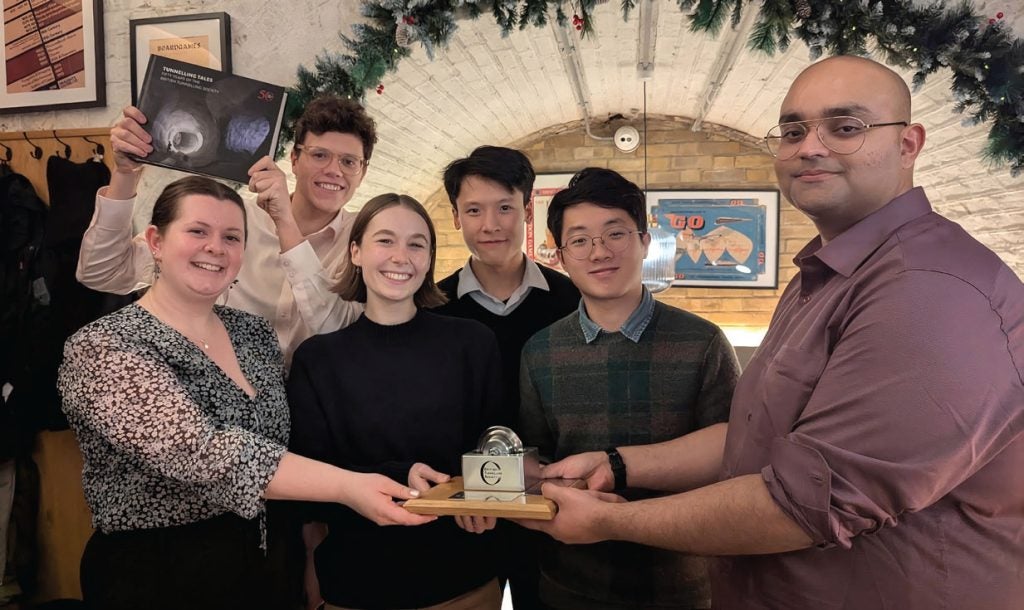
I believe it is essential to have values to achieve a vision rather than just priorities. The non-negotiable values to enable innovation, in my opinion, are as follows:
- Trust – It takes time to build but is fragile can be destroyed due to evolutionary reasons. We build systems/silos to eliminate the need for Trust by reducing vulnerability, but these silos prevent us from engaging with others and above all taking a leap of faith and perhaps fail. Trial, error and re-calibration is how real innovation happens, in my experience. This is even the next frontier of Machine Learning models, to move away from the statistical mimicry of Large Language Models (LLMs) to the trail-error approach of Reinforced Learning Models (RLMs).
- Tenacity – Whenever I failed in my attempts to innovate, all seemed lost and I felt like an imposter who has bitten more than they can chew. Resilience helps us get back on our feet, the capacity to “keep calm and carry on”, under pressure. It’s checking our fortitude through facing physical, mental or emotional challenges to grow stronger, as long as they don’t break you permanently with trauma – as per the concept of Anti-Fragility coined by Nasim Nicholas Taleb. Unlike materials which grow weaker when stressed, we humans grow stronger when pressured.
- Throughput – Our people are our most indispensable assets, their ideas fuelling our innovation engine. The throughput of our brains depend upon the velocity of sharing our thoughts, with trust and tenacity, to develop solutions. As demonstrated by Tin Seelig’s framework for innovation, there are three internal factors to innovation – Imagination, Knowledge, and Attitude – and also three external factors – Habitat, Resources, and Culture. All six factors are interconnected.
Structuring the challenges:
- Underground Space – Let’s face it most of us would not have joined this industry if we were straight thinkers apart from a few who might have just rolled the dice instead. In my opinion, this divergence of thoughts arising from the diversity of our membership is our biggest strength if focused on the right direction. Therefore, the first order of business in my term is to spread awareness about neurodiversity within our tunnelling industry as well as the wider underground space industry, and to make people comfortable with it. The presentation by our Diversity & Inclusion sub-chair, Tasnia, at World Tunnel Day 2025 – Mini- Conference: Bespoke Tunnels, Unique Solutions, was the first act towards this objective.
- Artificial Intelligence – The excitement of uncertainty of the underground attracts colourful characters to our industry, and this chutzpah is essential more than ever. We stand on the Rubicon with the coming age of artificial intelligence (AI) tools. Human-machine interactions with will be our next area of focus, wherein we will educate our membership to futureproof against this good chaos within our professional lives. We took the bull by the horns at the first lecture organised by our team at the BTYM’s AGM, hearing of ‘Human-Centred Digitalisation in Tunnelling: Practical Solutions for Smarter Operations’ from Maximilian Lischke, of Herrenknecht – courtesy our Events champion, Divik.
- Apprentices – Textbooks are a great tool to get answers, but you need to be asking the right questions. I learnt more perhaps in two months on site, during my internship, than the entirety of my undergrad. Apprentices have the best of both worlds, and we intend bust myths on apprenticeships with our very own Doug Allenby Medal winner apprentice, Annie- May, leading our Schools & Universities outreach, supported by Solomon.
International outreach:
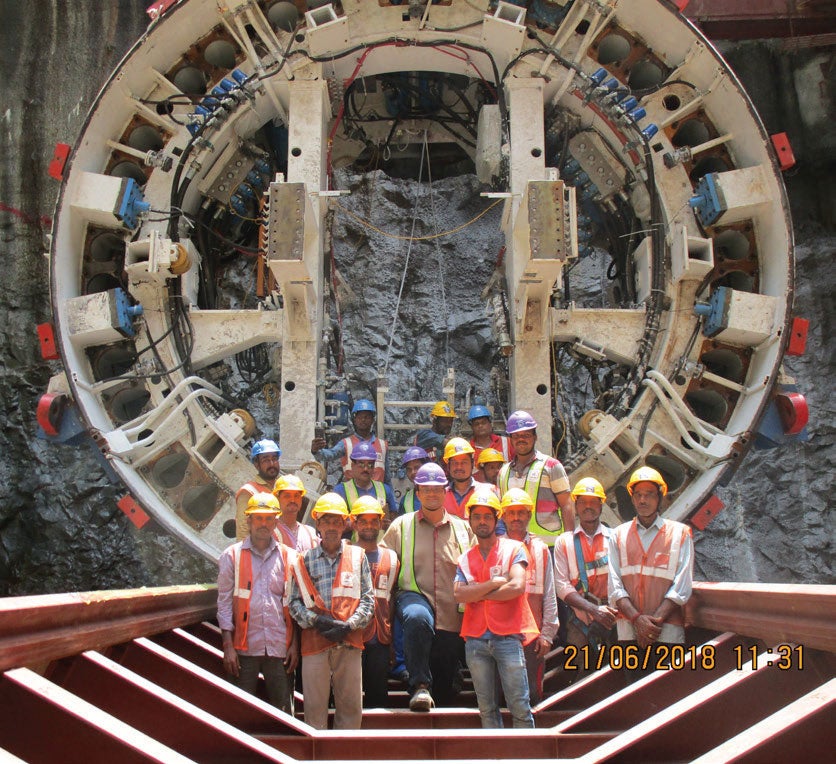
With WTC in May, our international outreach is being led by our vice-chair, Liana, who also spoke at the World Tunnel Day 2025. We are organising webinars with Young Members of fellow national tunnelling societies/ industry professionals, including in the US, France, Norway, Nigeria and Australia.
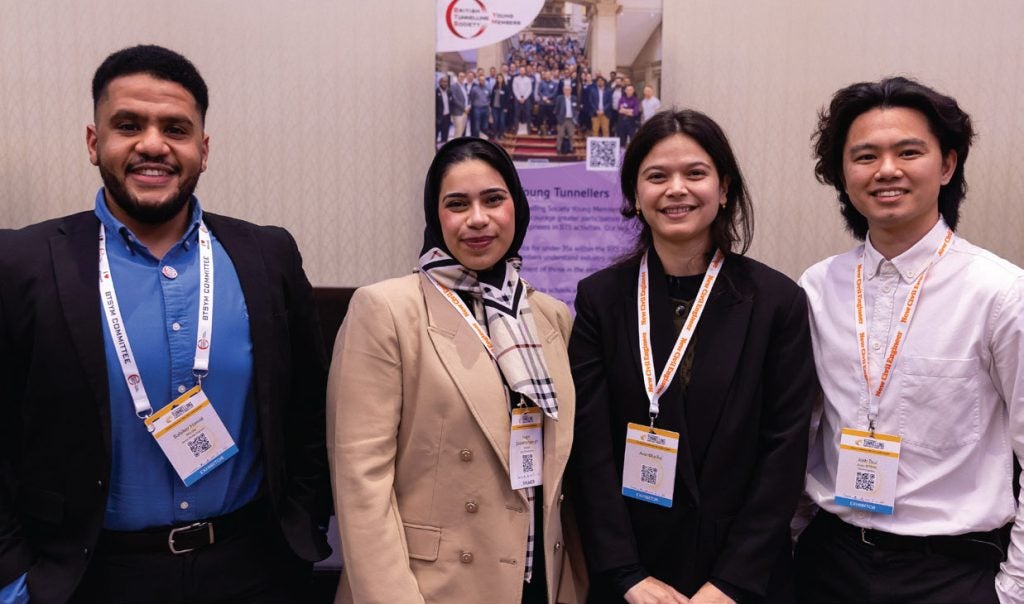
What are subcommittees up to?
- Professional Development – The subcommittee, led by Max, aims to support the learning and career development through technical lectures, workshops and professional skills events. Upcoming events include a lecture on ‘Compressed Air Working at the HS2 Bromford Tunnel’, and workshops are being developed on ‘SCL design in soft ground’ and ‘Surveying for Engineers’.
- Socials & Media – Led by Josh, the subcommittee will promote community engagement through creative content and events, which will include enhanced brand visibility, and fostering collaboration and inclusivity, sharing updates, and encouraging participation and feedback. Work is underway to automate outreach on social media by implementing AI tools in workflows.
- Schools & Universities– The subcommittee, being led by Annie-May, is eager to welcome new talent. Whether through school visits, university engagement, or promoting the BTSYM within the workplace, the aim is to increase visibility and connect with individuals who have an interest in tunnelling and the BTS. The subcommittee is also working in collaboration with Tunnel Skills for our STEM outreach and it talks with museums.
- Diversity & Inclusion– This subcommittee, being led by Tasnia, intends to make DEI a common value rather than just a priority of rhetoric by promoting respect among all individuals irrespective of their differences. It has already started contributing by spreading awareness on Neurodiversity, and intends to further outreach by celebrating International Women’s Day as last year, through fun craft activities, games and a social!
- Innovation & Sustainability – established last year, this subcommittee continues to be led by Negin. It is a formal platform for early-career professionals to drive sustainable and innovative practices. In its first year, the group progressed a technical paper for WTC 2026, and expanded its influence through participation in national and international sustainability forums.
- Industry & Partnerships – The I&P subcommittee aims to widen the network across the UK via three groups, in the North, Midlands, and South. The North group is led by Babiker, is exploring engagement events around Leeds and Manchester, intending to reach out to projects, both the new and where there is need to decommission/preserve historic tunnels; The Midlands group, led by Jonathan, is keen to build networks between clients, contractors and consultants, and to connect with societies outside of BTSYM; and, the South group, led by Jess, is exploring connections beyond London, including possible partnerships on the east coast.


