

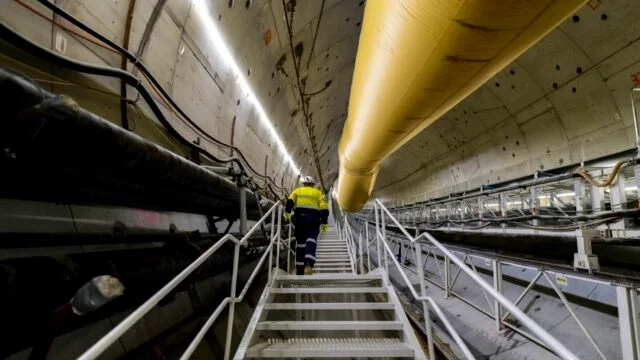
The cost of Australia’s Snowy 2.0 pumped storage hydro project could rise to A$25bn (€15.7bn) – a considerable increase on the original A$2bn price tag in 2017.
Following a comprehensive cost reassessment by principal contractor Future Generation Joint Venture (FGJV), Snowy Hydro yesterday announced a new target cost of A$22bn to complete the project, with an allowance for a A$25bn price tag.
The higher cost scenario reflects Snowy 2.0’s “uniqueness, risk and technical complexity”, as well as FGJV’s cost estimation challenges.
Snowy Hydro CEO Dennis Barnes said the cost reassessment also updated the project’s schedule, with the target completion date now late 2029.
Barnes said that while the cost increase was disappointing, actions taken during the 2023 reset had protected the project from an even larger budget increase.
“I have no doubt that moving from a fixed price contract, which was never suitable for such scale, uniqueness and complexity, has protected the project from an even greater cost increase,” he said.
“It’s also likely that under a fixed price contract, the project would again be stopped under the weight of billions of dollars of claims from the contractor, as it was prior to the reset.”
The cost reassessment found the primary reasons for the increased project cost were:
- detailed technical analysis continuing to identify the scale and nature of the design immaturity of the project when the final investment decision was made;
- construction complexities contributing to FGJV not meeting productivity targets;
- cost and planning underperformance by FGJV leading to previous underestimating of the delivery scope;
- global cost escalation for equipment, services and people exceeding allowances made at the 2023 contract reset.
Snowy Hydro has taken action to strengthen the project’s delivery and cost performance, including:
- directing FGJV to establish a project control office with enhanced data and analytics to drive productivity and identify risks early, which is now operational;
- embedding independent infrastructure delivery and cost experts in the project to bolster delivery oversight;
- establishing a new board oversight committee, including external megaproject advisers to monitor and act on progress and risk;
- driving changes in FGJV’s leadership on the project, including a new project director, responsible for daily cost and schedule performance, and more senior, globally experienced megaproject leaders.
The contract established at the 2023 reset has provisions that motivate FGJV to manage cost and programme, and meet safety, environment and quality criteria.
“We’re now much further through the project than at the 2023 reset, meaning we’ve learned more and more risk is behind us,” said Barnes. “At the reset, only 44% of the construction design had been completed, now it’s 96%.
“While there are still risks to manage, the project is in its strongest position yet.”
There are now more than 5,000 people working on the project. Underground power station construction has commenced, decommissioning of TBM Lady Eileen Hudson has started, after completing its second tunnel, following 8.6km of tunnelling; and TBM Florence is almost at the halfway point of its 15km drive.


