
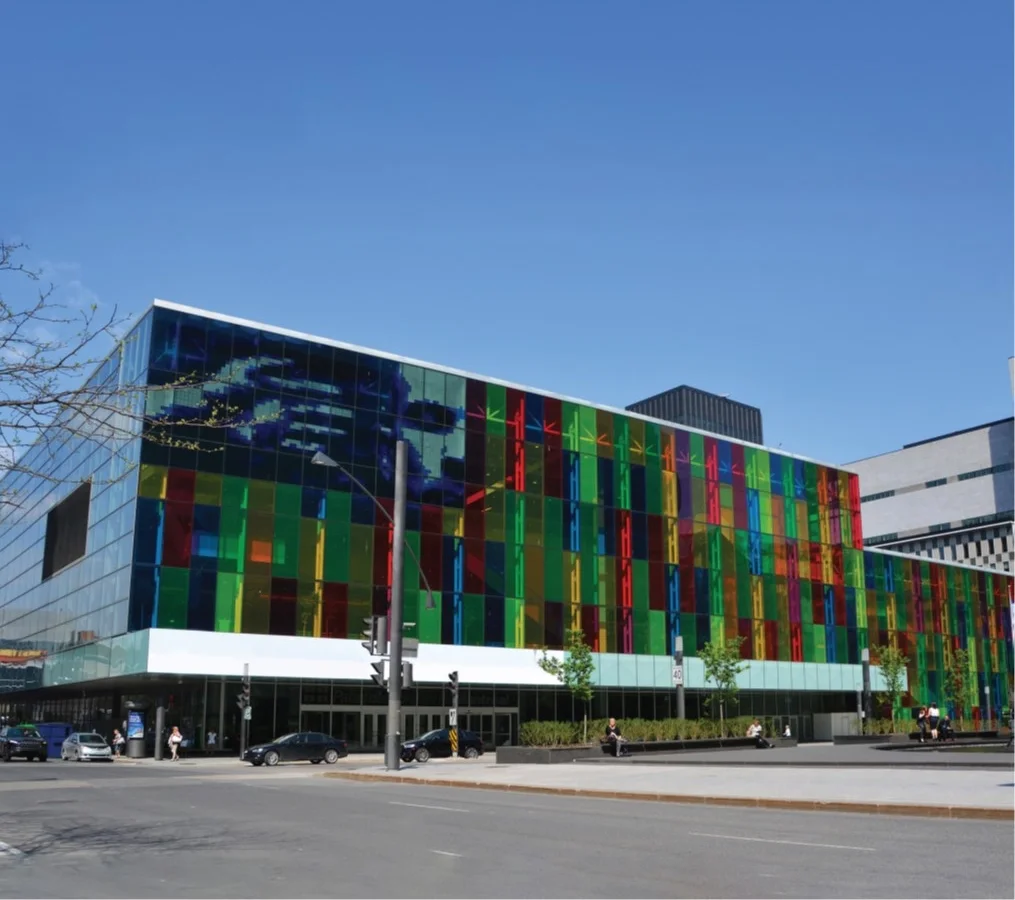
Canada is set to host the next large gathering of the global community of underground construction and operation specialists. The World Tunnel Congress 2026 (WTC 2026) will be held in Montréal, in mid-May.
A packed schedule is planned, including training courses, a scientific programme, social activities, technical visits, and plenty of opportunity to meet and talk with the event sponsors and exhibitors.
Before any of the main event activities get underway, the opportunity of such a large international gathering once again brings the possibility of attending training courses, over 15-16 May. The courses are organised by ITA-CET.
The planned scientific programme for ITA-AITES’ WTC 2026 – and organised by the Tunnelling Association of Canada (TAC) – will run on parallel tracks over 18-20 May, following the Opening Ceremony of the 18 May. The formal opening of proceedings will also include the Muir Wood lecture and also Keynote speeches.
This WTC, the Muir Lecture will be given by Remo Grandori to discuss tunnel boring machines (TBMs) – the challenges, innovations and logistics of using such shields on large-scale underground construction projects.
In the two Keynote speeches at the event: urban planner Larry Beasley is to discuss the future of city development; and, Dr Karina Lange of the International Atomic Energy Agency (IAEA) is to talk about its work in advancing deep geological disposal of radioactive waste and co-operation with ITA-AITES.
Following the main congress and exhibition, on 21 May there will be Technical Visits with choices of the host city’s Metro Blue Extension project and the Louis- Hippolyte-La Fontaine Tunnel rehabilitation project, respectively. Both are morning tours, each with limited numbers for attendance.
Separate to technical presentations and visits, are scheduled social activities, including at the outset a Welcome Reception (17 May), and then the penultimate evening (19 May) will see the TAC Awards Dinner, and the final evening (20 May) the Congress Dinner. Both dinners are ticketed events, and Reception also has a fee and it is limited in capacity.
TECHNICAL PROGRAMME
The scientific programme for WTC 2026 (18-20 May), following the Opening Ceremony, and prior days of the ITA General Assembly and training courses (described in the next section), will see dozens of presentations organised in parallel tracks.
Invited presentations for the planned scientific programme are to cover one of the following themes:
- Contractual Practices, Insurance and Risk Management
- Planning and Use of Underground Space
- Site Investigation and Ground Characterisation
- Instrumentation, Monitoring and Remote Sensing
- Artificial Intelligence and Machine Learning
- Conventional Tunnelling in Challenging Conditions
- Sequential Excavation and NATM
- Mechanised Tunnelling in Challenging Conditions
- Immersed Tunnels
- Caverns and Power Houses
- Microtunnelling
- Shaft Design
- Innovative Tunnelling
- Robotics and Automation
- Ground Support and Lining Design
- Grouting, Groundwater Control and Waterproofing
- Digital and Information Technology
- Operation, Inspection, Maintenance and Rehabilitation
- Safety in Tunnelling
- Equity, Diversity and Inclusion in Tunnelling
- Sustainability/Net Zero
Throughout the three days of the scientific programme there will also be e-poster sessions to further add to the body of presentations made available to delegates.
TRAINING COURSES
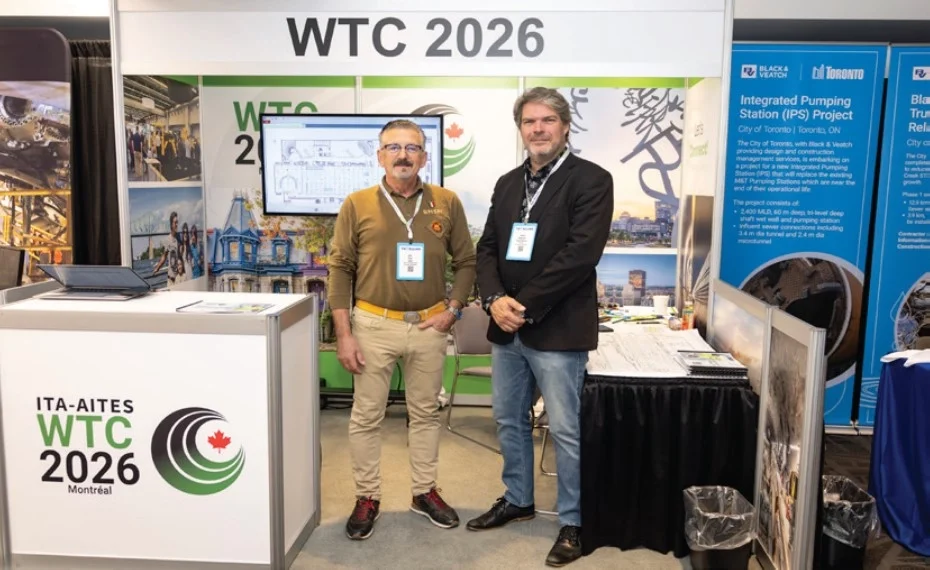
The training courses organised by ITA-CET are arranged in four themes, each being given a half-day over the 2-day (15-16 May) window. Each of the half days will holds four sessions, or steps, to explore the theme under study.
The themes in the half-days, and the proposed four sessions for each, are:
- Site Investigation/ Geocharacterisation: Planning; Managing uncertainty and alignment selection; Case study; and, Panel debate – developing Geotechnical Baseline Reports (GBRs).
- Excavation and Ground Control Methodology/ Selection: Evaluating options; Selecting technology for excavation and support; Case study; and, Debate – TBM -v- D&B.
- Contracting/ Delivery Methods: Contracting approaches; Cost estimates; Case Study; and, Panel debate on project delivery.
- Safety, Sustainability and Innovation: Inspection and Rehab; Carbon neutrality; Safety in all stages from design through construction to operation; and, Digital workflow and artificial intelligence (AI).
Fees for the course are arranged in three price levels: Standard; Young Member; and, Student.
SPONSORS
WTC 2026 is the following sponsors:
Diamond level: Hatch.
Platinum: Herrenknecht, Mapei, Sika.
Gold: Aecom, Arcelor Mittal, CREG, WSP.
Silver: Acciona Infrastructure, Groupe Aecon, Arcadis, Bekaert, Conquip, Conseil, Ingenierie et Developpement, Delve Underground, Dolenco Tunnel Systems, Dr G Sauer & Partners, EBC, Gamuda Technologies, Ghella Canada, infraMOD, Jacobs, Maccaferri, Master Builders Solutions, Michels, Sandvik.
Additional partners: Arup, Geoforming, Jay Dee Canada, LJB Engineering, MC-Bauchemie Canada, Mott MacDonald, Normet, Protan, Smith and Long, Traylor Bros, GHD.


